
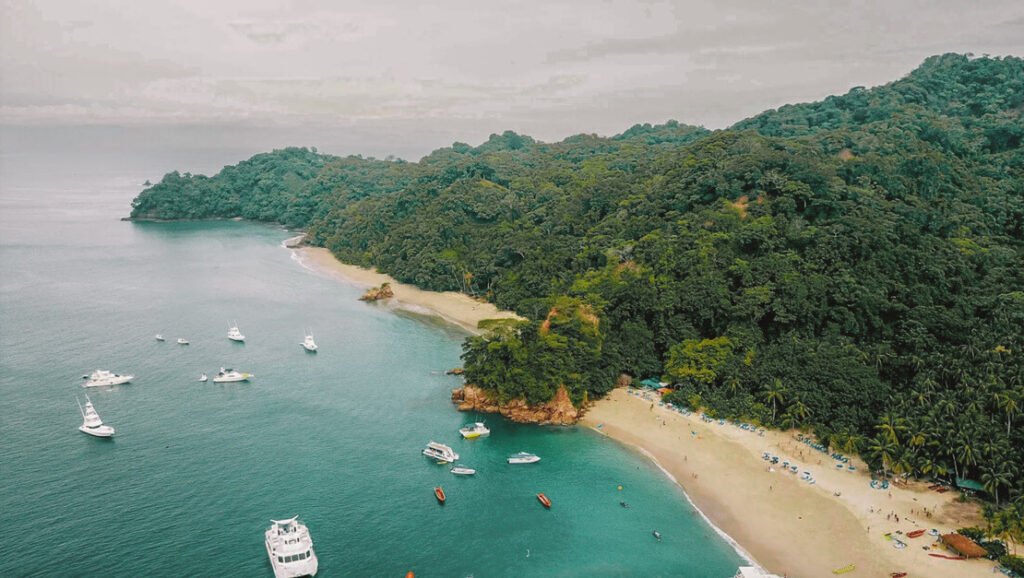
Costa Rica is a top pick for nomads who want beaches, surf towns, rainforests, and a friendly expat scene all within a short domestic flight or drive.
Top hotspots for remote work include Santa Teresa and Nosara (Nicoya Peninsula) for surf and wellness. Tamarindo and Playa Flamingo (Guanacaste) for infrastructure and expat services. Manuel Antonio / Quepos for nature-access, Puerto Viejo on the Caribbean coast for a lively Afro-Caribbean vibe, and the Central Valley (San José / Escazú / Heredia) for fastest internet and city conveniences.
Quick summary
- Eligibility: proof of foreign income of at least $3,000 USD/month (individual) or $4,000 USD/month (with dependents) for the prior 12 months. Income must be from outside Costa Rica.
- Insurance: minimum medical coverage typically required is $50,000 USD for the visa period; you must present an active policy during the in-person appointment.
- Length: initial 12 months, renewable once for another 12 months (total possible 2 years).
- Typical timeline: 2–3 months from start to receiving DIMEX, but processing times can vary, and delays have been reported.
A short history of how the visa came to be

The law creating a framework for a digital nomad residency category was promulgated in 2021, and implementing decrees plus administrative setup followed in 2022.
Costa Rica began accepting digital nomad visa applications in mid-2022 after the legislation and executive decrees were finalized, making the country one of the earliest Latin American governments to adopt a formal nomad residency option.
Who the visa is right for
- Solo remote professionals who earn from clients or employers outside Costa Rica.
- Couples or families who meet the higher combined income threshold and want to legally reside for 1–2 years.
Anyone testing Costa Rica before committing to a longer residency or property purchase. - Travelers who want to avoid repeated tourist-visa exits (“visa runs”).
- If you’re looking for long-term residency instead, consider the Pensionado, Inversionista, or Rentista visa options.
Legal requirements:
| Requirement | What you must show |
| Minimum income | $3,000 USD/month for individuals; $4,000 USD/month for applicants with dependents — proven with bank statements or contracts covering the 12 months before application. Income must be sourced from outside Costa Rica. |
| Health insurance | Policy covering medical expenses (common threshold $50,000 USD), hospitalization, emergency care; valid for the visa duration and presented at the in-person appointment. |
| Documents for dependents | Apostilled marriage certificate (spouse) and apostilled birth/adoption certificates (children), generally issued within the recent months as required by immigration rules. |
| Nationality/Passport validity | Valid passport (standard requirement) and any consular/visa documents per your nationality. (Check Migración for nationality-specific consular rules.) |
(Note: some official and promotional pages at different times showed slightly different family thresholds, e.g., an early $5,000 family figure on tourism pages — always verify the current guidance on the government migration website or with a consulate before applying.)
Step-by-step application process
- Create an account on the government portal, TramiteYa!
- Submit the “Filiation” / preliminary procedure and your personal data online.
- Primary application submission: upload financial proof (12 months bank records, affidavits), apostilled documents, translations where required, and pay the Step 3 government application fee at BancoCR.
- In-person appointment (Step 4) at Migration or a local Correos office: present originals, proof of health insurance (policy), pay the remaining fees/deposits, and complete biometric/identity steps. After that, you wait for the DIMEX ID issuance. Typical timelines from start to DIMEX were commonly reported as 2–3 months, but real times can var,y and there have been reports of longer waits for DIMEX cards.
Fees & realistic cost estimate
Government fees and practical costs that applicants encounter:
- Step 3 government fee (paid in-person at BancoCR): $100.
Digital submission fee (Step 3 online): roughly $10–15. - Step 4 deposit: $100.
- Step 4 fee: ~$135.
- Health insurance: commonly $200–$400/month depending on age, coverage, and insurer; international plans or Costa Rican plans accepted if they meet coverage minimums.
- Translations & notarizations: typically $15–$30 per page (varies).
- Income statement / certified documents: $200–$300 if you use an accountant/notary for affidavits and apostilles.
- Legal fees: $1000-3000 if using traditional law firms, $815 working with StartAbroad
Total startup cost (ballpark): Expect to spend several hundred dollars (excluding monthly insurance) on government fees, apostilles, translations, and professional help. If using a visa service, budget more for service fees.
Processing time — realistic expectations
- Gathering Financial Documentation: Compiling 12 months of bank statements is usually a quick process, potentially done in a single day if you have organized records and online banking access.
- Obtaining a Background Check: The time for this largely depends on your home country’s authorities, typically taking 1 to 4 weeks.
- Apostille Process: Getting documents (like background checks and birth certificates) apostilled to verify their authenticity can take an additional 1 to 3 weeks.
- Document Translation: All non-Spanish documents must be officially translated into Spanish by a certified translator. This usually takes 3 to 7 days.
- Acquiring Health Insurance: This can be done in 1 to 3 days once you know the required coverage (at least $50,000 USD).
- Filling and Submitting the Application: The actual online form submission is quick, taking 1 to 2 days.
- Processing Time: Many applicants historically report a total of 2 to 3 months from starting the process to receiving their DIMEX card.
- Personal Preparation: Most applicants spend a concentrated 2 to 4 weeks — roughly 20 to 80 hours of personal effort — gathering documents, completing requirements, and preparing their applications.
- Professional Support: Working with a Relocation Expert,, can cut weeks off the process by avoiding common errors and handling all local requirements, whereas doing it yourself often involves delays from missed steps or translation and payment issues.
Appointments:
- The immigration authorities review the online application within 15 calendar days.
- After approval, you must enter Costa Rica within 90 days to finalize the documentation.
- An in-person appointment for biometrics (fingerprints and photos) and to receive your DIMEX identity card is required. This appointment typically takes place a couple of weeks before you receive the final card.
- However, immigration offices have experienced delays at times, and news in late 2025 reported longer waits for DIMEX issuance (two months or more in some categories). Always check current processing updates and plan accordingly.
What the visa does and does not give you
Yes — it gives you:
- Legal stay for 12 months (renewable once).
- Exemption from Costa Rican income tax on foreign-sourced income (Costa Rica taxes on a territorial basis). Confirm with a tax adviser for specifics and implications for your home tax residency.
- Ability to present your foreign driver’s license as valid during the visa term (avoids the 90-day tourist limit on licenses).
Duty-free import privileges for personal work equipment are available in many cases.
No — it does not automatically:
- Grant permanent residency or citizenship. You must follow temporary residency or other routes for long-term status.
Where to live as a nomad in Costa Rica
- Santa Teresa / Mal Pais (Nicoya Peninsula): surf + co-working + wellness scene; moderate internet options, strong nomad community.
Nosara: wellness, surf, expat infrastructure, and co-living options; pricier but nomad-friendly. - Tamarindo / Guanacaste: better in-town internet, health services, flights to Liberia; large expat network.
- Manuel Antonio / Quepos: nature and wildlife with decent services; good if you want jungle + beaches.
- San José / Escazú / Heredia: fastest internet, best medical facilities, coworking spaces; good base if you need reliable city infrastructure.
Common application pitfalls & how to avoid them
- Submitting insufficient or non-apostilled documents — get apostilles before starting.
- Using insurance that doesn’t meet the minimum coverage or isn’t valid for the whole visa period — confirm policy wording.
- Financial evidence gaps — keep clean bank records showing foreign deposits for the full 12 months.
- Underestimating translation and notarization needs — budget for certified translations where required.
- Parents’ Surnames – If you leave either parent’s second surname blank in Step 2, your application will be rejected, even if multiple surnames aren’t common in your country.
FAQ
How long does the Costa Rica digital nomad visa last?
12 months, renewable for another 12 months.
How much income do I need?
Proof of at least $3,000/month for individuals; $4,000/month for applicants with dependents (verify current thresholds before applying).
Do I need health insurance?
Yes, the policies are typically required to cover ~ $50,000 USD and be valid through the visa term.
How long does it take?
- Commonly 2–3 months, but check for current processing delays.
Final notes and recommended next steps
- Check the official migration site and TramiteYa! for the latest forms and country-specific details before you prepare apostilles.
- Gather 12 months of clearly documented foreign income, get required documents apostilled, and book a health policy that meets the coverage threshold.
- If you prefer certainty and to avoid translation/bureaucratic mistakes, consider a specialist service for document preparation and the TramiteYa submission — it costs more but saves time.
Author Bio:
Zach and Anna moved to Costa Rica and now help others relocate abroad, where they specialize in visa support and relocation services for expats.